

In St. Cloud, we often focus on the “curb appeal” of a new roof—the shingle color, the texture, and how it makes the house look. But as any experienced Minnesota roofer will tell you, the most important part of your roofing system is the part you can’t see.
Your roofing underlayment is the hidden secondary barrier that sits directly on your roof deck. While shingles are designed to shed the majority of water, underlayment is your final line of defense against the “Minnesota Triple Threat”: wind-driven rain, heavy snow loads, and the inevitable formation of ice dams.
At Exterior Pro, we don’t just “shingle roofs”; we build high-performance weather protection systems. Understanding the difference between a “budget” underlayment and a professional-grade installation is the difference between a dry home and a $10,000 ceiling repair.
Roof Underlayment Comparison: What Are the Options?
For decades, the industry standard was “tar paper” or asphalt-saturated felt. While it’s still used today, modern technology has introduced synthetic options that offer significantly better protection for our harsh climate.
1. Traditional Asphalt Felt Underlayment
- What it is: Paper or fiberglass mats saturated with asphalt to make them water-resistant.
- The Pros: It is the most affordable option upfront.
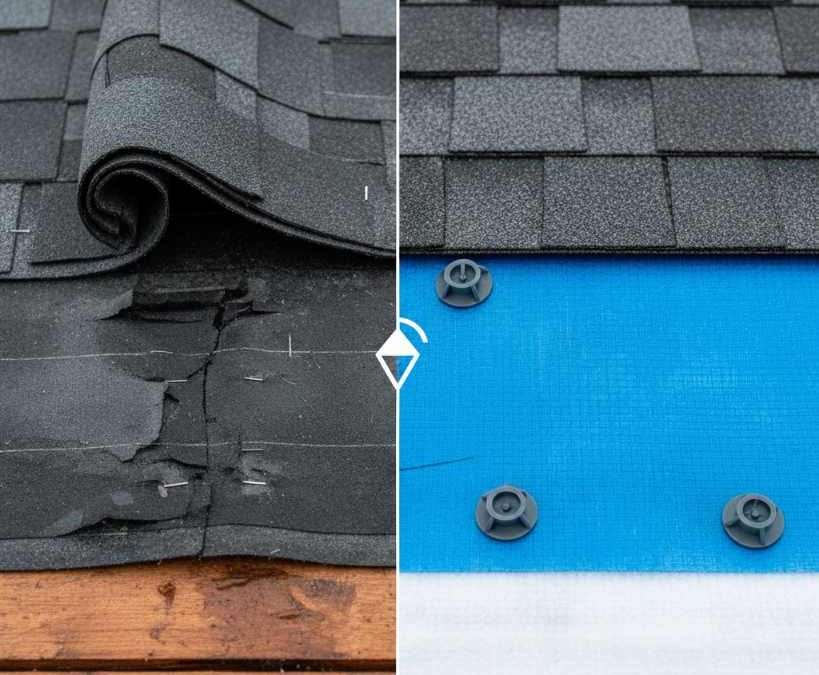
- The Cons in St. Cloud: Felt is prone to tearing during installation or high winds. It can become brittle and crack in our -30°F winters. If it gets wet before the shingles are installed, it can “wrinkle” or telegraph through the shingles, creating an uneven look.
2. Non-Bitumen Synthetic Underlayment (The Professional Choice)
- What it is: Engineered from tough polymers (polyethylene or polypropylene).
- Why we recommend it:
- Durability: It is virtually impossible to tear, even during high-wind events.
- Cold-Weather Flexibility: Unlike felt, synthetics stay flexible in extreme cold, ensuring they don’t crack as your house expands and contracts.
- Moisture Protection: Synthetics repel water rather than absorbing it, preventing mold growth and wood rot on your roof deck.
- Longevity: Most synthetic underlayments come with 30-year to 50-year warranties, matching the lifespan of high-quality shingles like the Atlas Pinnacle shingles we install.
3. Rubberized Asphalt (Ice & Water Shield)
- What it is: A self-adhering, “peel-and-stick” membrane that creates a 100% waterproof seal.
- The Minnesota Requirement: In St. Cloud, the building code requires an ice barrier that extends from the eave’s edge to a point at least 24 inches inside the warm wall line of the building. This is non-negotiable for ice dam prevention.
Underlayment Installation Standards: The Exterior Pro Way
A high-quality material is only effective if it’s installed to professional standards. “Cutting corners” usually happens in the underlayment phase because it’s hidden from the homeowner. Here is how we ensure your underlayment meets—and exceeds—industry standards:
- Deck Preparation: We never install underlayment over old, rotted, or damp wood. We perform a full inspection of the roof deck to ensure it is solid and dry.
- Ice & Water Shield in Critical Areas: We don’t just do the bare minimum code. We apply rubberized asphalt membranes in “high-risk” areas, including valleys, around chimneys, and around all roof penetrations (like vents and pipes). This creates a “gasket” seal around every nail driven through it.
- Proper Overlapping: Water flows downward. We install underlayment “shingle-fashion,” starting at the bottom and overlapping the upper layers over the lower ones (typically a 4-inch horizontal lap and a 6-inch end lap). This ensures that if a shingle is ever damaged, water is directed safely off the roof rather than under the underlayment.
- Cap-Fastener Installation: We avoid using simple staples, which can pull through in high winds. We use plastic cap nails that provide a wider surface area to hold the underlayment securely and prevent moisture from seeping through the nail hole.
Why Quality Underlayment Saves You Money
Choosing a synthetic underlayment and a professional-grade ice barrier adds a small percentage to the upfront cost of your roof, but it is the single best investment you can make for your home’s longevity.
A high-quality underlayment system:
- Protects your warranty: Many manufacturers, like Atlas, require specific underlayment standards to honor their lifetime warranties.
- Prevents mold and rot: By keeping the roof deck dry, you avoid structural failures and health issues in your attic.
- Offers “Dry-In” Protection: If a storm blows shingles off your roof, a high-quality synthetic underlayment can often keep your home dry for weeks until repairs can be made.
Get an Expert Assessment
Don’t let a “cheap” roof quote put your home’s structure at risk. If you are planning a roof replacement in St. Cloud, ask your contractor about their underlayment standards.
Ready to see what’s really going on with your roof? Request a Free, Transparent Estimate from Exterior Pro today. We’ll show you exactly how we protect your home from the roof deck up.
- Serving: St. Cloud, Sartell, Sauk Rapids, and surrounding areas.
- Expertise: Haag Certified Inspectors and Atlas PRO+ Diamond Level Installers.
- Read More: Important Components of an Asphalt Shingle Roof.