

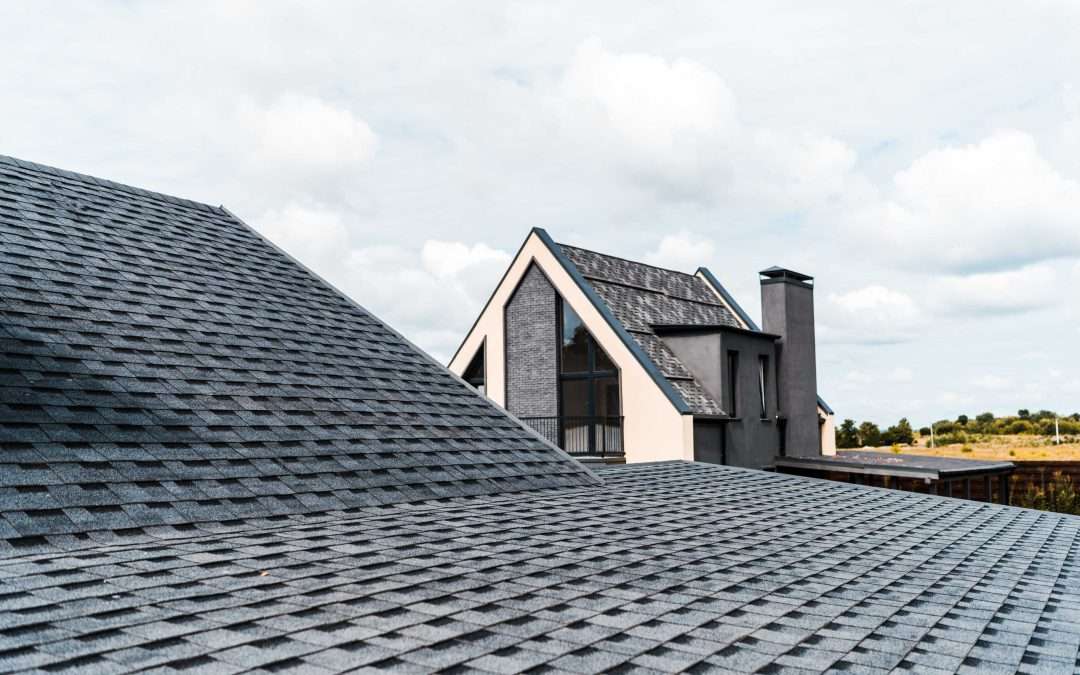
It’s not just a roof. It’s an intricate arrangement of many different parts, each of which contributes something essential to the structure as a whole.
Knowing the common parts of a roof will help you single out problematic areas by name, thus greatly simplifying your interactions with local roofing contractors. It is also a great way to impress people at parties. “Look, up there, at the roof” you can tell someone you would like to impress at a party. “That is the soffit.” They will be impressed.
Let’s review all the common parts of a roof right now!
- Shingles – The roof’s outermost surface, which protects it against ultraviolet light, rainfall and meltwater. Shingles are typically comprised of three components: granules, which may be imbued with antimicrobial substances; asphalt, which forms the majority of the shingle’s protective surface; and fiberglass, the shingle’s lightweight and fire-resistant core.
- Ridge – The highest point of the roof, where two planes meet at an angle. Roof ridges are typically shielded by specialized hip and ridge cap shingles, which are bent at the center to create a seamless barrier against rain and wind.
- Hip – A sloping intersection of two planes running from the roof’s fascia all the way up to its peak. Like the ridge, the hip is protected by specialized bent shingles.
- Valley – The V-shaped intersection between two sloping planes. May be protected by special bent shingles; or, alternatively, exposed flashing.
- Vent – Any part of the roof which allows warm air to escape from the attic. Vents are effective at preventing the circumstances which can contribute to the formation of ice dams.
- Flashing – Not to be confused with a crime committed by mentally disturbed people on public transport. Flashing is sheet metal (typically galvanized steel) installed around vents, skylights, chimneys, and other critical areas to protect against water infiltration.
- Deck – The flat, level surface (usually plywood) that lies on top of the roof’s frame and beneath its shingles and underlayment. The deck bears the weight of the roof’s shingles, and must be replaced if it becomes damaged as a result of stress, moisture or age.
- Underlayment – A barrier of synthetic material which occupies the space between the deck and the shingles. Underlayment primarily serves as a barrier that protects the deck and underlying frame against moisture. It is not visible when the roof is intact and properly installed.
- Soffit – The downward-facing part of the roof that extends beyond the exterior wall; i.e. the area spanning the underside of the rafter rails. Soffits may contain attic vents.
- Fascia – The horizontal band running between the roof’s shingled surface and its soffit; i.e. the area spanning the ends of the rafter rails. The fascia typically bears the weight of the roof’s gutters.
- Frame – The roof’s skeleton, which is comprised of beams, rafters, braces and joists. The frame is essential to supporting the weight of the deck, shingles, and the accumulated snow.
- Roofer – A friendly individual who is commonly found carefully navigating rooftops. Roofers are essential to ensuring that homes remain dry, energy efficient, and capable of enduring the stress of strong wind and heavy snowfall.
Does your roof lack its most important part: a roofer? If you live in the greater St Cloud, Little Falls, Alexandria or Brainerd, MN area, then Exterior Pro is standing by to provide the experienced roofer you need to complete the roof on your home or commercial property. We welcome you to contact us today for a free inspection, as well as an estimate for the work that will restore your roof to its best condition!