

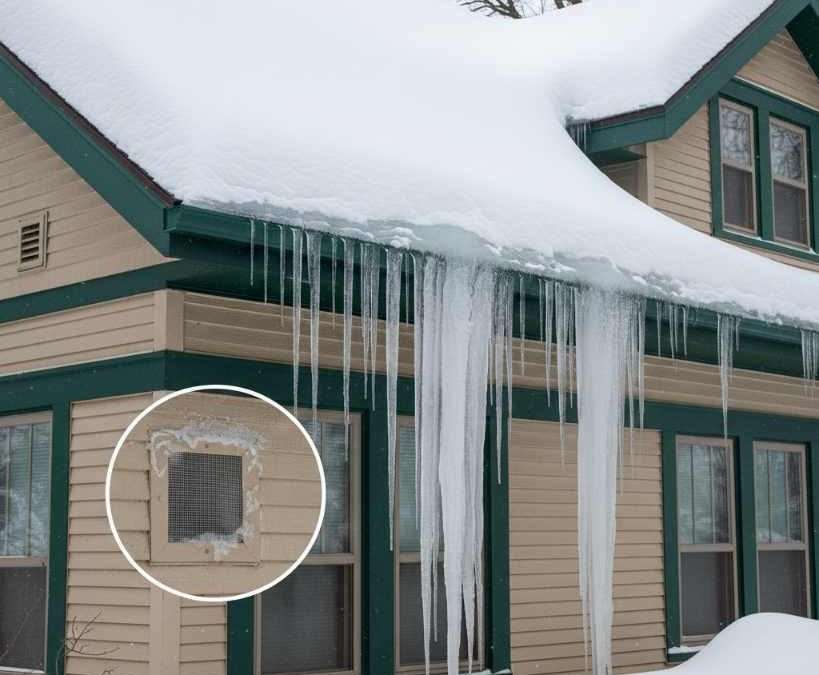
For homeowners in St. Cloud, winter isn’t just about snow days and heavy coats—it’s about the silent war happening in your attic. If you’ve ever looked up at your eaves and seen massive icicles or a thick ridge of ice, you’re witnessing a symptom of a much deeper problem: poor roof ventilation.
At Exterior Pro, we see it every year. Homeowners think ice dams are a “roofing material” problem or an “insurance” problem. In reality, they are almost always a ventilation and insulation problem. Understanding the “science of the attic” is the first step to protecting your home from the rot, mold, and premature roof replacement that St. Cloud winters can cause.
The Anatomy of an Ice Dam: Why Heat is the Enemy
An ice dam doesn’t form because it’s cold outside; it forms because your roof is too warm. 1. Heat Escape: Warm air from your St. Cloud home leaks into the attic through unsealed light fixtures, attic hatches, or poor insulation. 2. The Melt: This trapped heat warms the underside of your roof deck. The snow on top begins to melt from the bottom up, even when it’s zero degrees outside. 3. The Refreeze: The melted water flows down to the eaves (the edges of your roof). Because the eaves aren’t over the heated living space, they remain freezing cold. The water hits this “cold zone” and instantly freezes into a block of ice—the dam. 4. The Backup: As the cycle repeats, water pools behind the ice dam. Eventually, it finds its way under your shingles, through the roof deck, and into your ceilings and walls.
How Proper Attic Ventilation Saves Your Roof
The goal of attic ventilation in St. Cloud is to keep your roof’s temperature as close to the outdoor temperature as possible. This is achieved through a “balanced” system of intake and exhaust:
- Intake Vents (Soffits): Located at the lowest part of the roof edge, these allow cool, fresh air to enter the attic.
- Exhaust Vents (Ridge Vents): Located at the highest point of the roof, these allow warm, moist air to escape naturally.
When these two work in harmony, they create a continuous flow of air that “washes” the underside of the roof deck, keeping it cool and preventing the uneven snowmelt that creates ice dams.
The Hidden Danger: Preventing Mold in the Attic
While ice dams cause immediate leaks, poor ventilation also creates a long-term health hazard: attic mold.
In our humid Minnesota winters, warm air escaping into a cold attic creates condensation—similar to how a cold soda can “sweats” on a hot day. This moisture soaks into your wood rafters and insulation. Without proper airflow to dry it out, your attic becomes a breeding ground for mold and mildew.
By the time you see black spots on your ceiling or smell a musty odor, the structural integrity of your roof sheathing may already be compromised, leading to an expensive and “untimely” roof replacement.
Expert Signs Your St. Cloud Home Has a Ventilation Gap
As a Haag Certified Inspector, co-owner Josh Helberg looks for these “red flags” that indicate your ventilation system is failing:
- Icicles at the Eaves: While they look pretty, large icicles are almost always a sign of heat loss and poor intake ventilation.
- Frost in the Attic: If you look in your attic on a freezing day and see “rime” or frost on the nails or wood, you have a moisture problem.
- Rusting Nails: Moisture buildup causes roofing nails to rust from the inside out, weakening the hold on your shingles.
- Curling Shingles: Excessive attic heat in the summer and moisture in the winter can cause shingles to “cook” or warp years before their time.
Why a “Quick Fix” Isn’t Enough
Many homeowners try to solve ice dams with heat cables or by raking the roof. While these can help in an emergency, they are “band-aids” that treat the symptoms, not the cause.
A truly protected home requires a balanced approach. At Exterior Pro, we don’t just “slap on shingles.” We perform a comprehensive analysis of your attic’s health. If your insulation is blocking your soffit vents or your ridge vent isn’t properly sized for your square footage, your new roof won’t last as long as it should.
Protect Your Home This Winter
Don’t wait until you’re dealing with a soaked ceiling or a moldy attic. Proper roof ventilation for ice dams is an investment that pays for itself by doubling the lifespan of your roof.
Ready for a “Health Check” on your roof? Schedule a Free, Expert Roof Inspection with Exterior Pro today. We’ll help you identify the air leaks and ventilation gaps that are putting your home at risk.
- Learn More: Check out our guide on Understanding Water Spots on Your Ceiling
- St. Cloud Residents: Visit our St. Cloud Roofing Page for local service details.
- Contact Us: Call 844-ASK-4PRO to speak with an expert.