

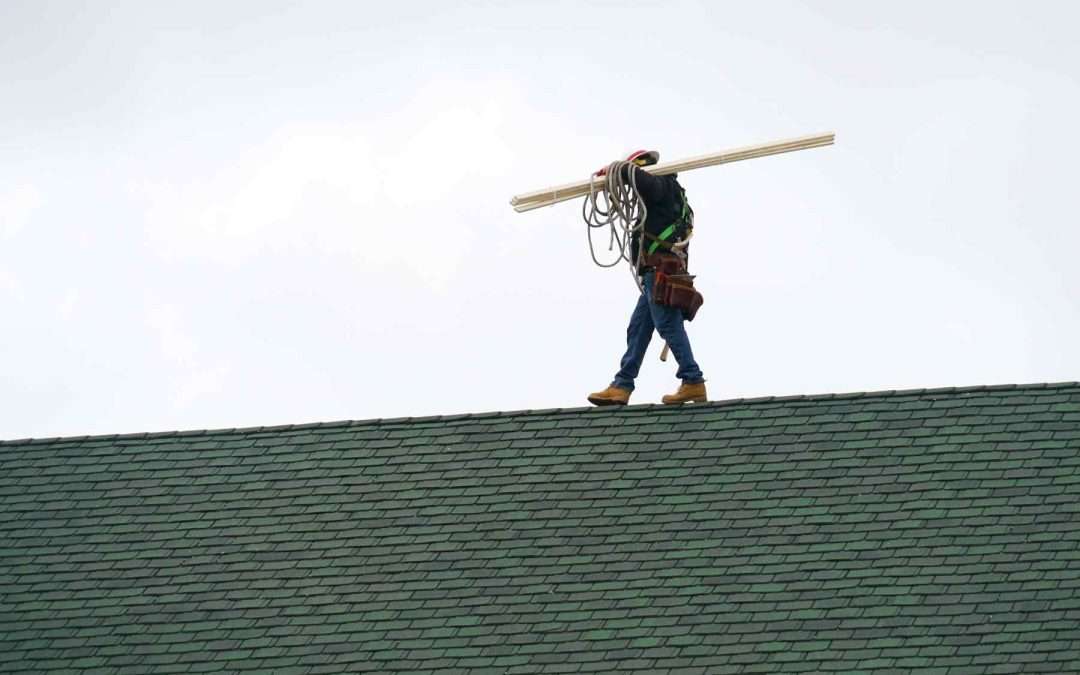
It happens every February in St. Cloud. A homeowner looks up after a heavy snowfall or a particularly windy day and notices a loose shingle or a bit of flashing that doesn’t look quite right. The “weekend warrior” instinct kicks in, and the thought follows: “I’ll just grab the ladder and fix that myself this afternoon.”
While the desire to save money is understandable, DIY roofing is one of the most hazardous home improvement projects you can undertake—especially in a Minnesota winter. At Exterior Pro, we believe your safety is more important than any repair bill.
Before you pull that ladder out of the garage, here are the real DIY roof repair dangers you need to consider.
Is It Safe to Walk on a Roof?
The short answer for most homeowners is: No. Even if the shingles look clear of snow, St. Cloud winters create unique hazards that are invisible from the ground. Frost, “black ice,” and condensation can turn a standard asphalt roof into a skating rink in seconds.
When people ask, “Is it safe to walk on a roof?”, they often forget that roofing professionals use specialized equipment. We use high-traction footwear, safety harnesses, and “roof anchors” specifically designed to prevent falls. A standard pair of work boots or sneakers offers almost zero grip on a cold, frost-covered shingle. Furthermore, in February, shingles become brittle. Walking on them in sub-zero temperatures can actually crack the materials you are trying to “fix,” turning a minor repair into a major leak.
Why You Shouldn’t Carry the Risk
One of the most overlooked DIY roof repair dangers isn’t physical—it’s financial. When you work on your own roof, you are assuming 100% of the risk.
- Your Insurance: If you fall off your roof or accidentally cause a major leak during a DIY repair, your homeowner’s insurance policy may not cover the damage if it’s determined the work was performed by an unlicensed individual.
- Professional Protection: When you hire a contractor, you should always verify their roofing liability insurance. At Exterior Pro, we carry comprehensive insurance that protects both our workers and your property. If an accident happens on the job, our insurance handles it, not yours. This “safety net” is a huge part of the value a professional contractor provides.
Hidden Damage and Warranty Issues
A roof is a complex system of layers. What looks like a simple loose shingle might be a symptom of a deeper ventilation issue or a failing underlayment.
- Misdiagnosis: DIYers often apply a “patch” that actually traps moisture against the roof deck, leading to rot and mold.
- Voiding the Warranty: As an Atlas PRO+ Diamond Level installer, we know that many manufacturer warranties require that any repairs be performed by a certified professional. Touching your own roof with a hammer and a tube of sealant can inadvertently void the 30- or 50-year warranty you rely on.
Keep Your Feet on the Ground
There is a reason roofing is consistently ranked as one of the most dangerous jobs in America. In St. Cloud, where the weather can change in an instant, that risk is even higher.
If you suspect your roof has storm damage or a leak, don’t risk a trip to the emergency room. A professional inspection is significantly cheaper than a hospital stay or a botched DIY repair that causes a ceiling collapse.
Get a Professional, Safe Roof Assessment
Don’t gamble with your safety this winter. Let the experts at Exterior Pro handle the heights and the ice.
Is your roof ready for the spring thaw?
Request a Free, Professional Roof Inspection from Exterior Pro
We’ll use our expert equipment and Haag-certified training to give you an honest look at your roof’s health—all while you stay safe and warm on the ground.
- Serving: St. Cloud, Sartell, Sauk Rapids, and the surrounding Central MN area.
- Expertise: Fully insured, safety-certified roofing specialists.
- Call Us Today: 844-ASK-4PRO
Siding Water Damage: How to Tell if Your Sheathing is Rotted
As the seasons shift in Central Minnesota, the inevitable cycle of melting snow and heavy rain puts a spotlight on the health of your home’s exterior. While most homeowners are quick to notice a missing shingle or a cracked siding panel, the most dangerous threat to your property is often the one you cannot see. For many St. Cloud and Brainerd residents, water damage behind siding is a silent predator, slowly rotting the structural sheathing that serves as the “skin” of the house.
Your sheathing consists of the wood panels installed directly onto the wall studs, providing the strength your home needs to withstand high winds and supporting your insulation. When moisture is allowed to linger against these panels, the structural integrity of your entire wall is at risk. Identifying the siding sheathing damage signs early is the only way to prevent a minor leak from becoming a catastrophic structural failure.
Why Does Water Get Behind Siding?
Although siding is designed to shed the majority of rain and snow, it is rarely a 100% waterproof seal. It relies on a carefully integrated system of house wrap, flashing, and proper drainage. In the harsh climate of Central Minnesota, water often finds its way behind the protective layer through a few common entry points. Ice dams are a primary culprit, as they force water to back up under the roofline and trickle down the interior side of the siding.
Failing or improperly installed flashing around windows and doors is another frequent cause of rot. If the metal seals are cracked or missing, water follows the path of least resistance directly to the wood sheathing. Additionally, as homes age, older “building paper” or house wrap can degrade, losing its ability to repel moisture. When combined with the extreme temperature swings that cause siding to expand and contract, small gaps can form at the seams, allowing wind-driven rain to infiltrate the wall cavity.
Identifying the Signs of Trapped Moisture
Because sheathing is hidden from view, homeowners must look for secondary clues that moisture is trapped and rot has begun. One of the most common visual indicators is wavy or warped siding. If your vinyl panels look “lumpy” or your engineered wood siding is beginning to swell at the edges, it is often a sign that the wood sheathing underneath has absorbed water and expanded.
You can also perform a “soft spot” test by walking around the perimeter of your home and gently pressing on the siding. High-quality siding over solid wood should feel firm and resistant. If you encounter a “spongy” feel or if the wall seems to “give” significantly under light pressure, the wood behind it has likely softened due to advanced rot.
Internal clues are just as telling. Mysterious staining on drywall, bubbling paint, or peeling wallpaper near window frames and baseboards often indicate that water has traveled through the sheathing and reached your interior living space. This is frequently accompanied by a persistent musty or earthy odor in specific rooms, which is a classic sign of rotting OSB or plywood hidden within the wall.
How to Fix Rotted Sheathing Under Siding
Addressing rot is not a project that can be delayed. Unlike a surface-level cosmetic issue, trapped moisture behind siding “cooks” the wood year-round, even during dry spells. How to fix rotted sheathing under siding is a meticulous professional process that begins with the strategic removal of the affected siding panels. This allows our team to expose the full extent of the damage and determine if the rot has reached the wall studs or saturated the insulation.
Once the assessment is complete, we cut out the compromised wood and replace it with fresh, structural-grade sheathing. However, the repair doesn’t end there. To prevent a recurrence, we upgrade the moisture barrier with high-performance house wrap and integrate professional-grade flashing. Only then is the siding re-installed or upgraded, ensuring a perfectly watertight fit that protects your home for the long term.
The Exterior Pro Advantage
At Exterior Pro, we believe in doing more than just “covering up” a problem with a new layer of siding. When we perform a siding replacement in Brainerd or St. Cloud, we conduct a thorough sheathing check as a standard part of our quality control process. We are committed to building homes that are as strong on the inside as they are beautiful on the outside.
Don’t let hidden rot destroy your home’s value.
Request a Free Siding and Sheathing Inspection from Exterior Pro
If you have noticed any red flags on your home’s exterior, contact us today. We will provide an honest assessment and a clear, professional plan to restore and protect your home’s structural integrity.
- Serving: St. Cloud, Brainerd, Little Falls, and the surrounding Lakes Area.
- Expertise: Expert siding repair, moisture mitigation, and full exterior restoration.
- Call Us Today: 844-ASK-4PRO
Steel Siding: Durability and Longevity in Central Minnesota
When homeowners in Central Minnesota begin researching exterior renovations, they often start with the most common materials like vinyl or engineered wood. While these are excellent choices for many, there is a “heavyweight” contender that is rapidly gaining popularity for those looking for the ultimate in protection: seamless steel. In a region where the weather can swing from humid ninety-degree summers to sub-zero winters, the argument for steel siding in St. Cloud is becoming harder to ignore.
Steel is no longer reserved for industrial warehouses or rural sheds. Modern residential steel siding offers a sophisticated, high-end look that mimics the texture of natural wood while providing a level of structural integrity that other materials simply cannot match. For homeowners who want to make a “once-in-a-lifetime” investment in their property, steel is often the final answer.
Steel Siding vs. Vinyl
The most frequent comparison we encounter is steel siding vs. vinyl. Vinyl has long been a favorite due to its low upfront cost and versatility. However, Minnesota’s extreme temperature fluctuations can be hard on plastic-based products. In the deep cold of a Northern winter, vinyl can become brittle. If hit by a stray hailstone or a rogue lawnmower pebble when frozen, it is prone to cracking or shattering.
Steel, on the other hand, maintains its structural integrity regardless of the temperature. It does not become brittle in the cold, nor does it sag or warp during a blistering July heatwave. While vinyl is designed to expand and contract significantly—which can sometimes lead to a “wavy” appearance if not installed perfectly—steel is incredibly stable. It provides a crisp, clean aesthetic that stays true year-round, regardless of what the Minnesota sky throws at it.
Steel Siding Longevity
The primary reason homeowners upgrade to metal is steel siding longevity. While most siding materials have a “useful life” of twenty to thirty years before they begin to show significant signs of wear, fading, or moisture absorption, steel is built for the long haul. Most professional-grade steel siding systems are rated to last fifty years or more, often outlasting the homeowners themselves.
This longevity is backed by advanced coating technologies. Modern steel is treated with high-performance finishes that are baked on at the factory, making them exceptionally resistant to chalking and fading. In the land of ten thousand lakes, we also have to consider moisture. Unlike wood or even some composite materials, steel is completely impervious to rot, mold, and insect damage. It creates a fire-resistant barrier around your home that requires virtually zero maintenance beyond an occasional rinse with a garden hose.
Impact Resistance
St. Cloud and the surrounding communities are no strangers to severe summer storms. Hail is perhaps the greatest threat to a home’s exterior in our region. When comparing materials, steel stands out for its superior impact resistance. While high-velocity hail might crack vinyl or bruise engineered wood, residential-grade steel siding is designed to shrug off most storm events.
Many insurance companies recognize the durability of steel and may even offer premium discounts for homeowners who install impact-resistant materials. Choosing steel isn’t just about aesthetics; it is a proactive strategy to reduce future storm damage claims and ensure that your home remains the best-protected property on the block.
Seamless Style for Modern Homes
At Exterior Pro, we specialize in seamless steel siding. Unlike “boxed” siding that results in visible seams every twelve feet, our seamless process involves custom-cutting the steel on-site to the exact dimensions of your home. This eliminates the unsightly gaps where wind, moisture, and pests can enter. The result is a sleek, continuous look that enhances the architectural lines of any home, from historic Little Falls properties to modern Brainerd lake houses.
Is it time to upgrade to the ultimate exterior?
Request a Free Steel Siding Consultation with Exterior Pro
If you are looking for a siding solution that combines industrial-strength durability with residential beauty, steel is the clear winner. Contact Exterior Pro today—your local St. Cloud steel siding experts—to see our wide range of colors and profiles designed to last a lifetime.
- Serving: St. Cloud, Brainerd, Little Falls, and the surrounding Central MN area.
- Expertise: Seamless steel siding installation and high-performance exterior systems.
- Call Us Today: 844-ASK-4PRO