

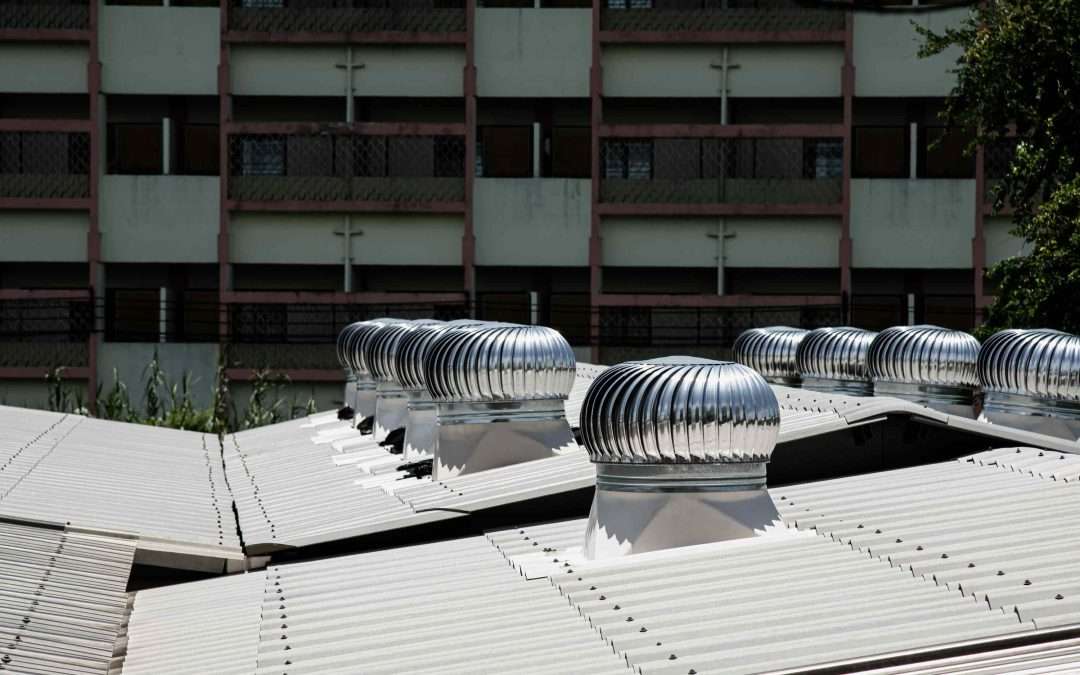
Without proper ventilation, the air temperature inside a home’s attic can easily exceed 150 °F on a hot day. Needless to say, a sweltering pocket of air hovering just above your living space is the last thing you want during the summer. That’s one of the reasons why roofs have vents: they allow hot air to escape from the attic so the home below can remain cooler.
That begs an important question: should attic vents be closed in winter, when hot air trapped inside the attic would theoretically be a good thing? The answer to that question is a resounding no. Let’s explain why!
Attic Vents Serve Many Important Purposes
Attic vents do promote greater comfort by allowing hot air to escape from the attic in the summertime – but that is far from their only function. Vents also:
- Prevent ice damming – An ice dam can form on any part of a roof when the area above it is warmer than 32 °F and the area below it is freezing. An ice dam keeps liquid water trapped on the roof, where it will seep through the shingles and decking and gradually saturate the attic, framing and walls. In addition to structural damage, dampness caused by ice dams can also contribute to mold growth. Although roof vents may not eliminate ice damming, they can reduce its occurrence by keeping the roof at a colder and more uniform temperature.
- Extend the roof’s lifespan – Heat damages asphalt, which is why a hot attic will not do any favors to the asphalt shingle roof covering it. Mold and mildew also flourish in heat, which is yet another reason why adequate ventilation can help a roof last longer. And when attic vents release heat, they also release moisture – yet another factor that contributes to needlessly fast degradation of roofing materials.
- Promote greater energy efficiency – Attic vents’ contribution to your comfort is quite obvious in the summertime. By releasing all that hot air from your attic, vents give your air conditioner a much easier job to do. The rewards are lower electricity bills and a longer-lasting air conditioner. But attic vents won’t just keep you more comfortable when it’s hot outside. Even in the wintertime, an inadequately ventilated attic can store up enough heat to make the upper story of a home uncomfortably hot!
Don’t Cover Your Attic Vents in the Winter
Cold weather brings condensation, which brings mold and mildew right alongside it. Without ventilation, your attic will retain sufficient moisture to breed all kinds of horrible fungi that produce irritating spores and destroy wood, sheetrock and insulation alike. If you want to avoid health issues and expensive property damage, then you simply cannot cover your attic vents.
Besides, sealing attic vents during the winter wouldn’t pose a financial benefit anyway. Once an attic is adequately insulated, only minimal heat will wind up escaping from it. What little money you do wind up spending on heat loss is nothing compared to the costs of mold infestation and rot.
Unfortunately, attic vents alone aren’t enough to prevent gradual roof degradation. If your roof in the greater St Cloud, Little Falls, Alexandria or Brainerd, MN area is starting to show its years, then you definitely want to get in front of the problem before it requires more expensive repairs than it has to.
Here’s our advice: contact Exterior Pro today for a free estimate! Once we’ve taken a close look at your roof, we’ll be all set to advise the most cost-effective solution to its repair or replacement.